
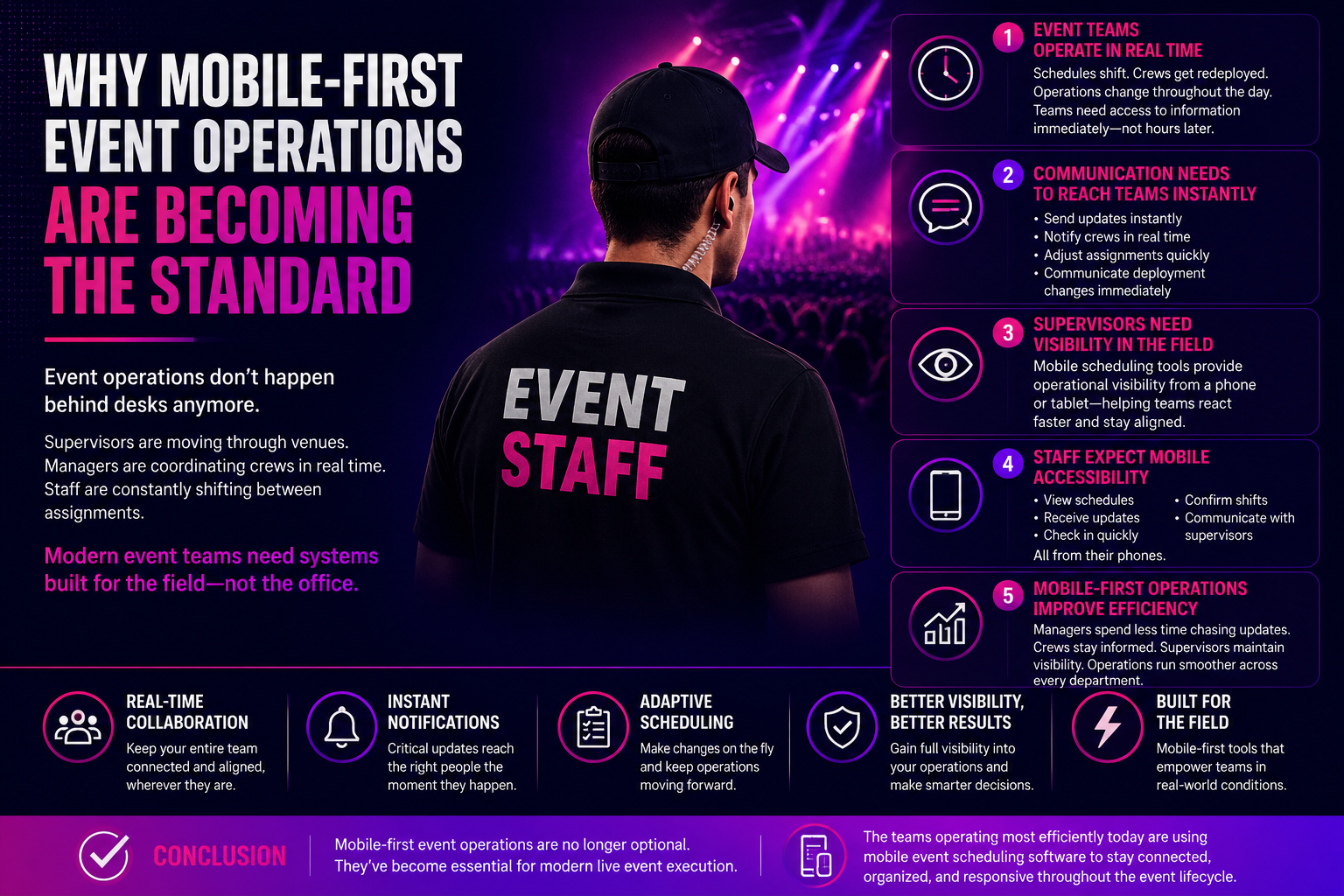
Event operations don’t happen behind desks anymore.
Supervisors are moving through venues. Managers are coordinating crews in real time. Staff are constantly shifting between assignments.
That’s why mobile-first operations are becoming the standard across live events.
Modern event teams need systems built for the field—not the office.
1. Event Teams Operate in Real Time
Live events move quickly.
Schedules shift. Crews get redeployed. Operations change throughout the day.
Teams need access to information immediately—not hours later.
Mobile event scheduling software allows crews and supervisors to stay connected from anywhere on site.
2. Communication Needs to Reach Teams Instantly
Operational communication loses value when updates arrive late.
Managers need the ability to:
- send updates instantly
- notify crews in real time
- adjust assignments quickly
- communicate deployment changes immediately
Mobile-first systems make that possible.
3. Supervisors Need Visibility in the Field
Supervisors aren’t sitting at laptops during events.
They’re:
- managing deployments
- handling operational issues
- moving through venues
- coordinating staff in real time
Mobile scheduling tools provide operational visibility directly from a phone or tablet.
That visibility helps teams react faster and stay aligned throughout the event.
4. Staff Expect Mobile Accessibility
Modern event crews expect mobile access.
They want to:
- view schedules
- confirm shifts
- receive updates
- check in quickly
- communicate with supervisors
All from their phones.
Teams relying on outdated workflows struggle to keep up with those expectations.
5. Mobile-First Operations Improve Efficiency
When information is accessible in real time, operations move faster.
Managers spend less time chasing updates. Crews stay informed. Supervisors maintain visibility.
As a result, event teams operate more efficiently across every department.
Conclusion
Mobile-first event operations are no longer optional.
They’ve become essential for modern live event execution.
The teams operating most efficiently today are using mobile event scheduling software to stay connected, organized, and responsive throughout the event lifecycle.