
Most guests only see the final result.
The lights are on. The gates open. The event begins.
However, behind every successful live event is a massive operational effort happening long before doors open.
Crews are deploying. Supervisors are coordinating. Production teams are adjusting timelines.
And everything has to stay aligned.
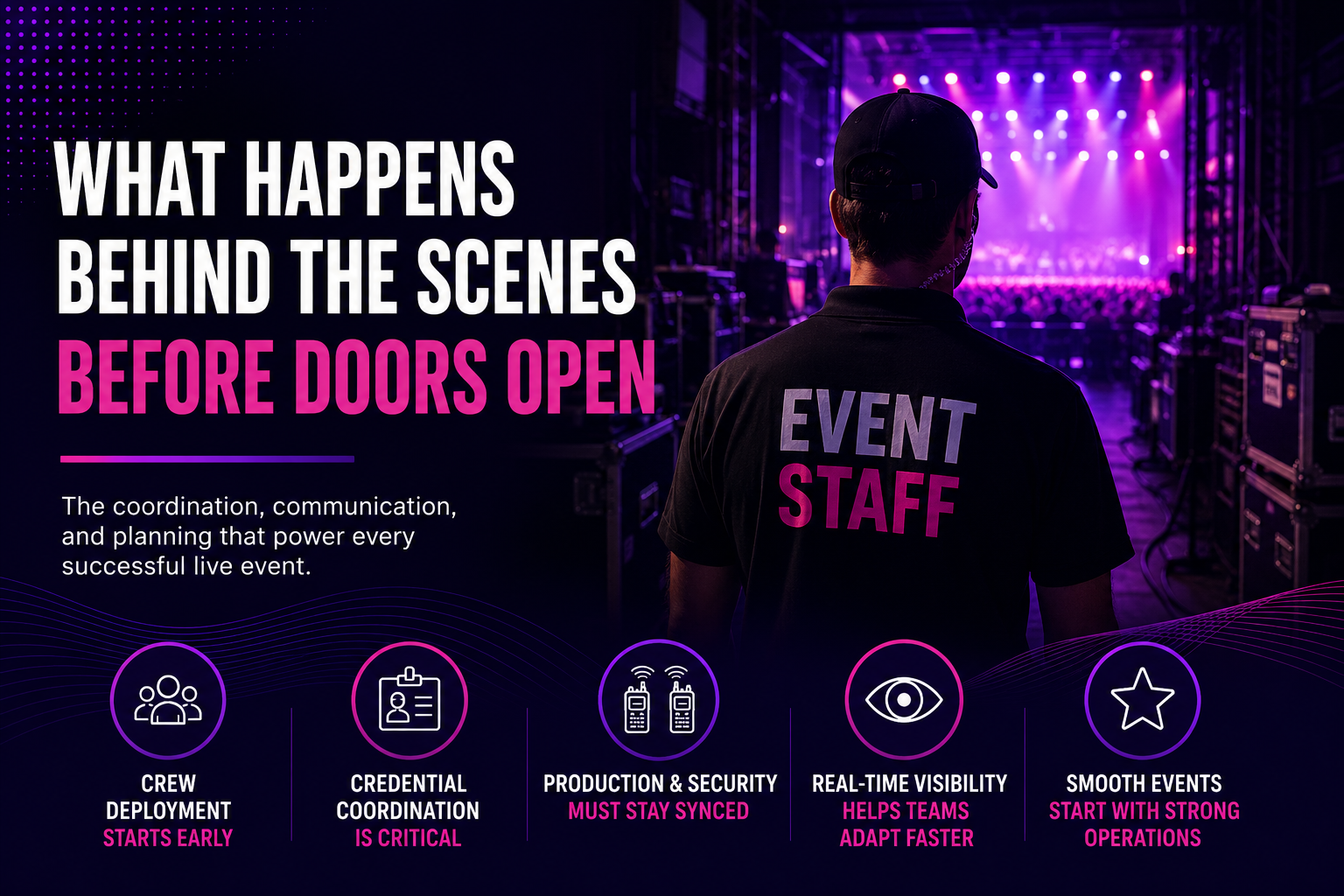
1. Crew Deployment Starts Early
Before guests arrive, crews are already moving across the property.
Security teams are deploying to gates. Production crews are handling setup. Hospitality teams are preparing service areas.
Timing matters.
If deployments fall behind, operations become harder to recover later.
2. Credential Coordination Is Critical
One of the biggest operational challenges before doors open is credential distribution.
Large events often involve:
- multiple crews
- different access levels
- changing deployment schedules
- staggered arrivals
Without organization, entry bottlenecks form quickly.
That’s why real-time visibility and structured scheduling matter before the event even begins.
3. Production and Security Must Stay Synced
Large events rely on multiple departments working together simultaneously.
Production adjustments can impact staffing. Security changes can impact deployments. Operational updates can shift timelines.
Strong communication keeps departments aligned when conditions change.
4. Real-Time Visibility Helps Teams Adapt Faster
Live events rarely go exactly as planned.
Crews arrive late. Weather changes. Operational priorities shift.
Managers need immediate visibility into:
- staffing coverage
- crew arrivals
- deployment status
- operational gaps
This allows supervisors to make adjustments before issues impact the guest experience.
5. Smooth Events Start With Strong Operations
The strongest events are usually the ones guests never notice operationally.
Everything simply feels organized.
That level of execution happens because teams are aligned before doors even open.
Conclusion
Guests may only see the final product.
However, successful live events are built through careful coordination, communication, and operational visibility long before the first attendee arrives.
The teams operating most efficiently today are using live event operations software to keep crews aligned and operations moving in real time.