
Most event teams focus on getting enough staff scheduled.
However, one of the biggest operational problems at live events isn’t understaffing.
It’s late arrivals.
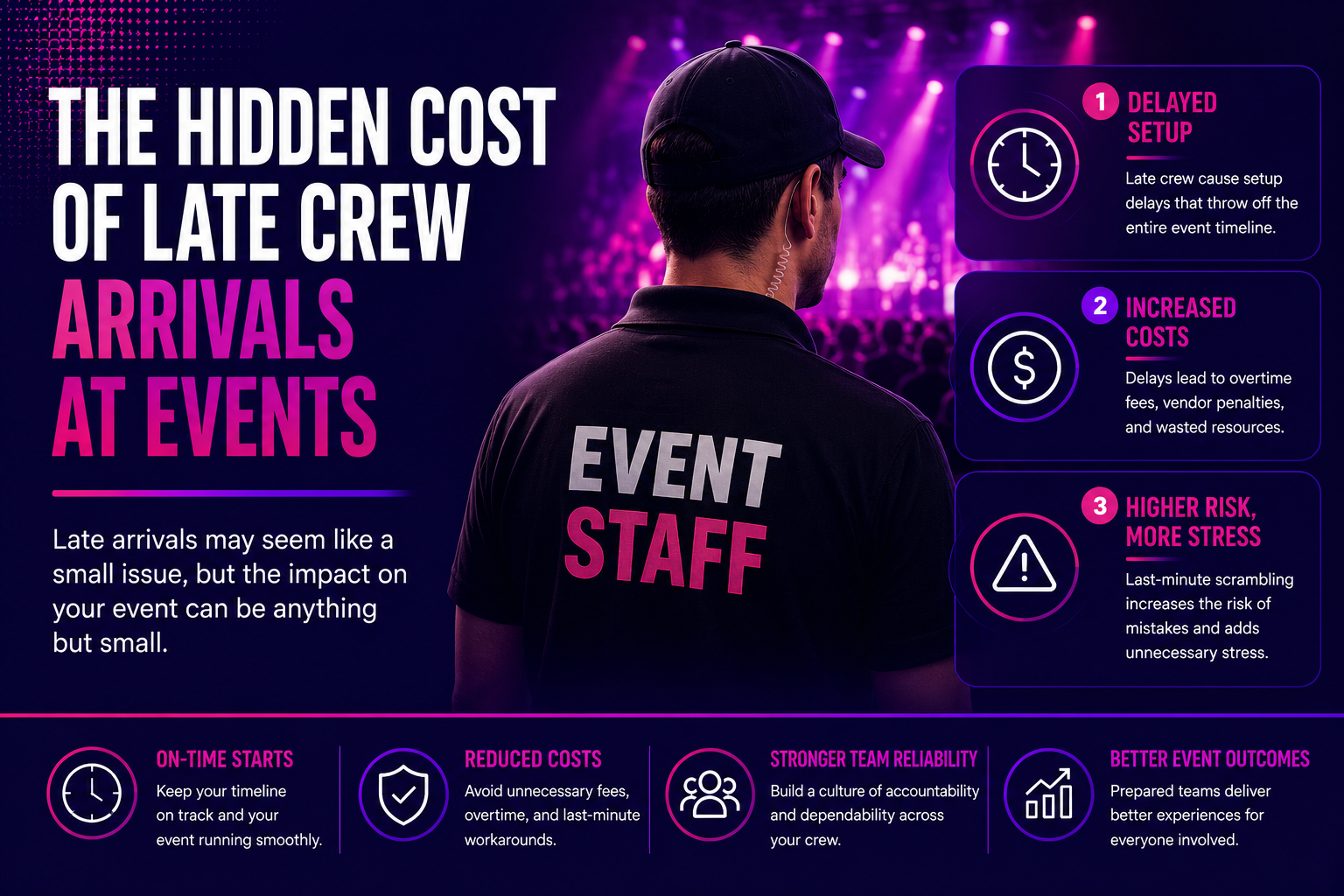
When crews arrive late, the impact spreads quickly across the operation.
Credential lines back up. Supervisors lose visibility. Deployments get delayed. And pressure builds before doors even open.
That’s why modern event teams are focusing less on simply scheduling staff—and more on operational readiness.
1. Delayed Arrivals Create Operational Bottlenecks
When crews don’t arrive on time, operations slow down.
Security deployments get delayed. Entry procedures back up. Production timelines shift.
One delayed crew can impact multiple departments across the event.
The larger the operation becomes, the more costly those delays are.
2. Credential and Check-In Lines Move Slower
Late arrivals create congestion.
Instead of staggered check-ins, large groups arrive all at once.
This leads to:
- longer credential lines
- slower check-in processes
- deployment delays
- reduced operational visibility
The result is unnecessary stress during one of the most important operational windows of the day.
3. Real-Time Visibility Matters
One of the biggest challenges during event deployment is visibility.
Managers need to know:
- who has arrived
- who is late
- where staffing gaps exist
- which positions still need coverage
With event staff scheduling software, supervisors can monitor check-ins and crew status in real time.
This allows teams to make faster operational decisions before delays impact the event.
4. Confirmations and Reminders Reduce No-Shows and Delays
Communication plays a major role in crew punctuality.
Modern scheduling systems help teams:
- send schedule confirmations
- push reminder notifications
- provide updated call times instantly
- communicate deployment instructions clearly
As a result, crews stay informed and arrive more prepared.
5. Operational Readiness Starts Before Doors Open
Strong events are built before guests arrive.
When crews are deployed properly and operations stay organized early, the rest of the event runs smoother.
That’s why more teams are investing in event staff scheduling software that improves communication, visibility, and deployment coordination.
Conclusion
Late crew arrivals create far bigger operational problems than most teams realize.
The strongest event operations focus on readiness, visibility, and communication long before doors open.
With the right event scheduling software, teams can reduce delays, improve deployment timing, and keep operations moving efficiently from the start.