
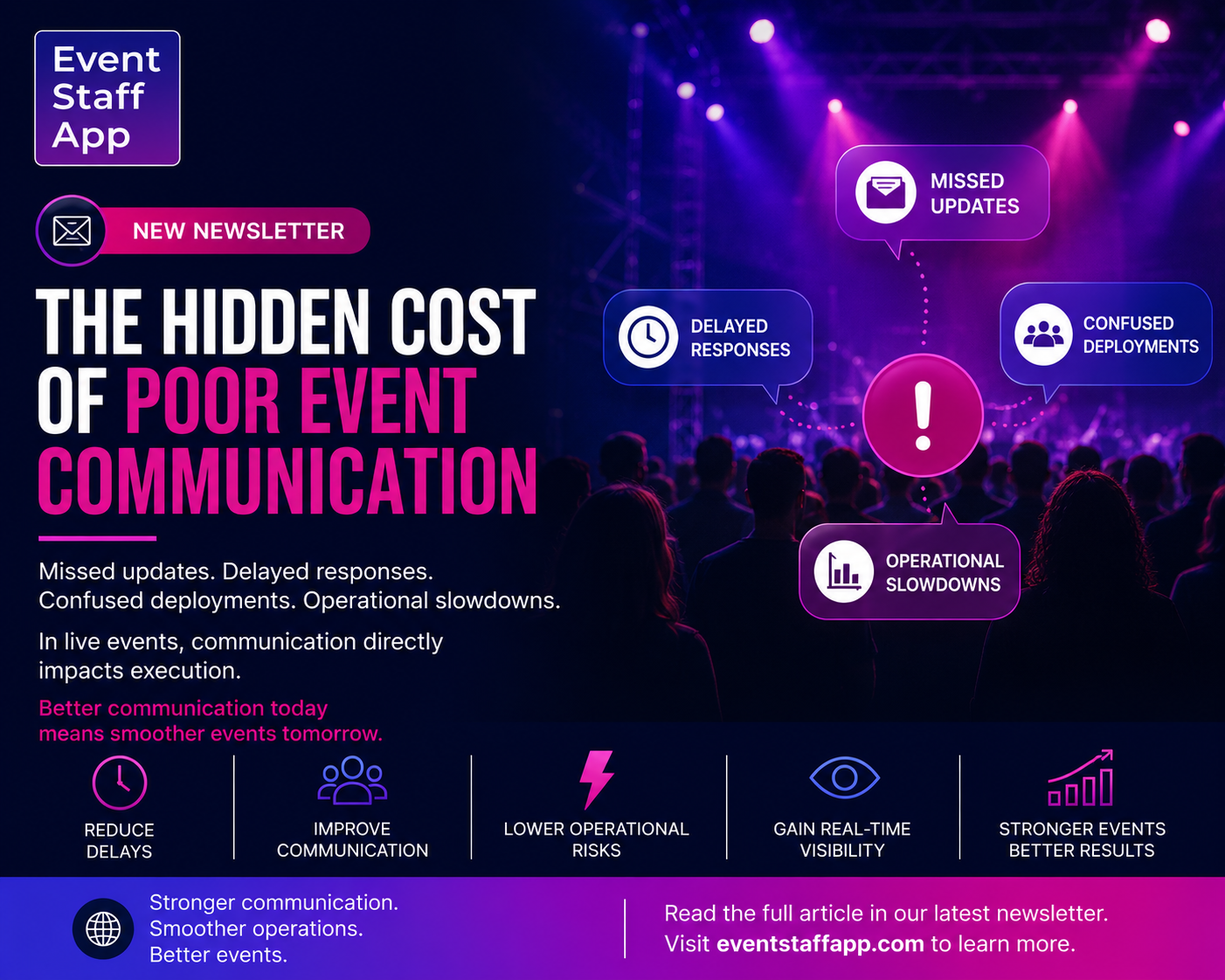
Communication issues create far bigger operational problems than most event teams realize.
Missed updates. Delayed responses. Confused deployments. Operational slowdowns.
In live event environments, communication directly impacts execution.
That’s why poor communication creates hidden operational costs long before guests ever notice a problem.
1. Missed Updates Create Operational Delays
Event operations rely on timing.
When crews miss important updates, operations slow down.
A delayed deployment or missed assignment can impact:
- staffing coverage
- entry operations
- production timelines
- guest flow
- operational coordination
The larger the event becomes, the more expensive communication breakdowns become.
2. Fragmented Communication Creates Confusion
Many event teams rely on disconnected communication systems.
Information gets spread across:
- group chats
- text messages
- emails
- radios
- spreadsheets
As a result, crews lose visibility into the latest operational updates.
Structured event communication software helps centralize communication and reduce operational confusion.
3. Delayed Responses Slow Down Decision-Making
Event environments require fast operational responses.
Managers need immediate communication when:
- staffing gaps appear
- deployment changes happen
- operational issues escalate
- weather impacts timelines
Slow communication creates slower decisions.
And slower decisions create operational inefficiency.
4. Structured Communication Improves Operational Alignment
The strongest event operations use communication strategically.
Not every update should go to every crew.
Operational communication works best when teams can:
- target specific groups
- communicate by role
- push updates instantly
- maintain visibility into active crews
Structured communication systems help teams stay aligned throughout the event lifecycle.
5. Better Communication Creates Better Events
Strong communication improves more than logistics.
It improves:
- operational flow
- staffing coordination
- deployment timing
- crew confidence
- guest experience
The strongest live event operations are usually the most organized behind the scenes.
And organization starts with communication.
Conclusion
Poor communication creates operational costs that extend far beyond messaging.
In modern live event environments, communication impacts visibility, deployment timing, staffing coordination, and operational execution.
That’s why more teams are investing in event communication software built specifically for live operations.
Because better communication leads to better execution.